Before you sprinkle anything, get on your hands and knees and find the smell.
Seriously. Most carpet odor comes from a few specific spots, and a whole-room treatment for a problem the size of a dinner plate wastes product and usually misses. Sniff close to the carpet in the usual suspects: the corner the cat likes, the area in front of the couch where people eat, the spot by the back door where wet shoes land, the pet bed. Once you know where it is and roughly what it is, the kitchen-cabinet remedies make a lot more sense.
Baking soda is good at exactly one thing
Baking soda absorbs mild odors near the surface. That's its job, and it does it well. Food smells, a general stale feeling, a room that's been closed up, light "dog" smell in a nap area: all fair game.
How to use it:
- Vacuum the area first so the powder can reach the fibers.
- Sprinkle a thin, even layer. You want a dusting, not drifts.
- Leave it several hours, or overnight if you can keep people and pets off it.
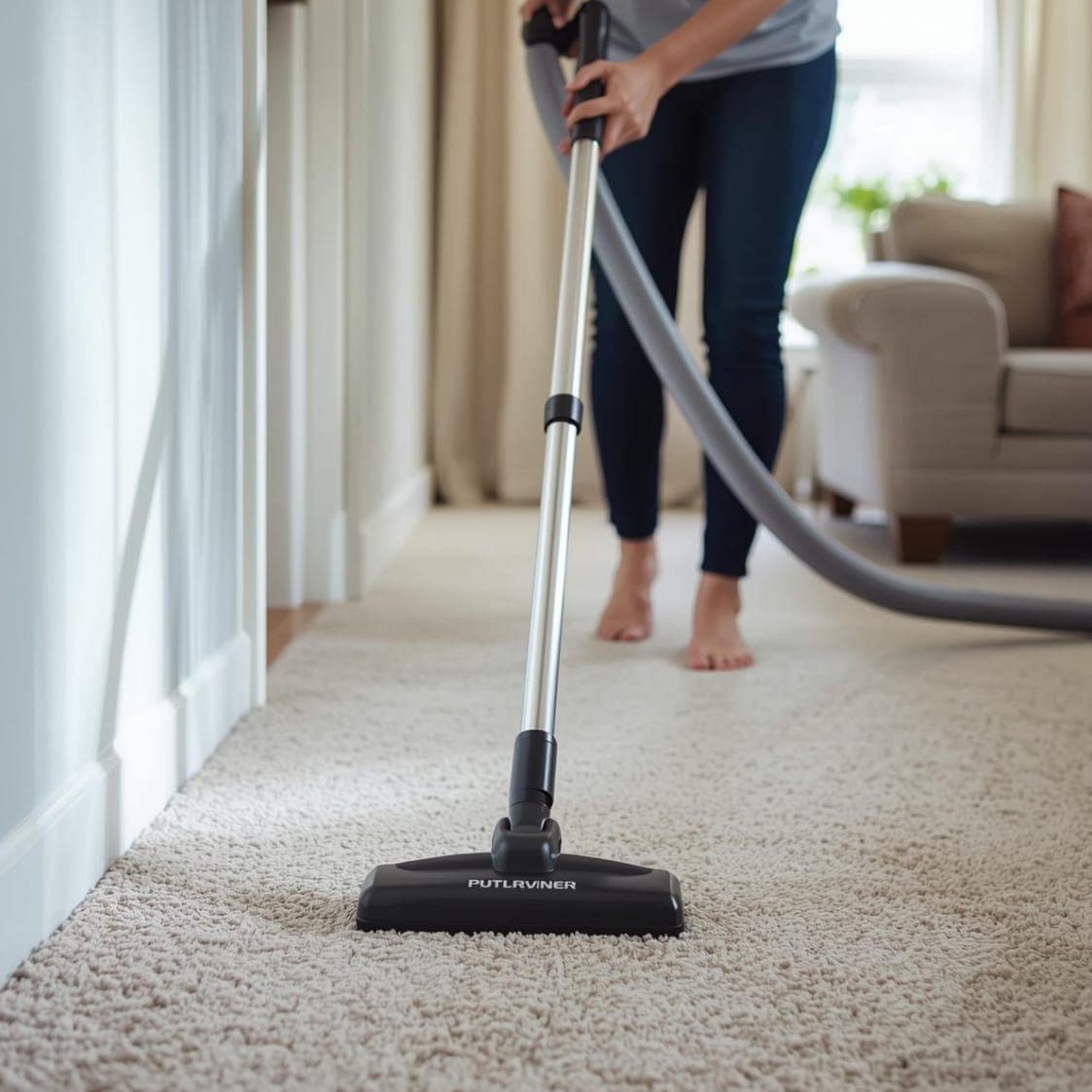
- Vacuum slowly, with several overlapping passes, and empty the canister after.
Where it falls short: baking soda can't reach odor sitting in the pad, and it doesn't break down urine. If you've had to deodorize the same spot three times this month, the source is deeper than baking soda goes. Go easy on frequency, too. Fine powder that never fully vacuums out builds up in the carpet and can be hard on some vacuums.
Vinegar and club soda, used carefully
White vinegar mixed half and half with water can neutralize some odors, especially sour ones. Mist it lightly, blot with a clean towel, and let it dry. The vinegar smell fades as it dries. The word that matters there is "lightly." A soaked spot is worse than a smelly spot.
Club soda is a spill tool more than a deodorizer. On a fresh spill, after you've blotted up as much as you can, a small pour of club soda and more blotting can help lift what's left. It does little for stains that have already set and nothing for old odors.
Two warnings. Never mix vinegar with bleach or with ammonia-based cleaners; the fumes are dangerous. And test anything on a hidden corner first, because some wool and natural-fiber carpets don't react well to acids.
The mistakes that make it worse
Too much water is the big one. In a humid place like Fort Bend County, a wet pad can take a long time to dry out, and damp padding grows its own musty smell. If you've wet a spot, put a fan on it and run the AC or a dehumidifier until it's completely dry.
Scrubbing is the second. It frays the fiber tips and pushes whatever you're treating down and outward.
Covering the problem is the third. Scented powders and sprays smell great for a day, and then you have the original odor plus perfume, plus a residue that grabs dirt.
A note on scented oils, since so many homemade deodorizer recipes add a few drops of them. They smell nice mixed into baking soda, but several common ones, tea tree and some citrus and pine oils among them, can be harmful to cats and irritating to dogs, who walk and lie on that carpet. If you have pets, leave the oils out or ask your vet first.
What no kitchen remedy will fix
Pet urine that's reached the pad, which is most urine. Musty odor from carpet that got genuinely wet, like after a leak or a storm. Smells that come back every time the weather turns sticky. For all of these, the source is under the surface, and the honest answer is that DIY won't get there.
That's when our enzyme odor service earns its keep. It's a live enzyme treatment that goes down into the pad and breaks the urine down at the source. For general mustiness and buildup, a regular carpet cleaning clears out the oils and soil that hold smells, without soaking anything. There's $25 off the pet treatment on the coupons page.
Baking soda for a stale room on a Saturday? Absolutely. Baking soda for the spot the dog has used for two years? Save yourself the box.