Your rug never leaves the house. We lead with that because it's the first thing most people ask, and because plenty of Sugar Land homeowners have lived through the other version: a van, a claim ticket, and three weeks of bare floor in the living room while the rug sits in a warehouse across town.
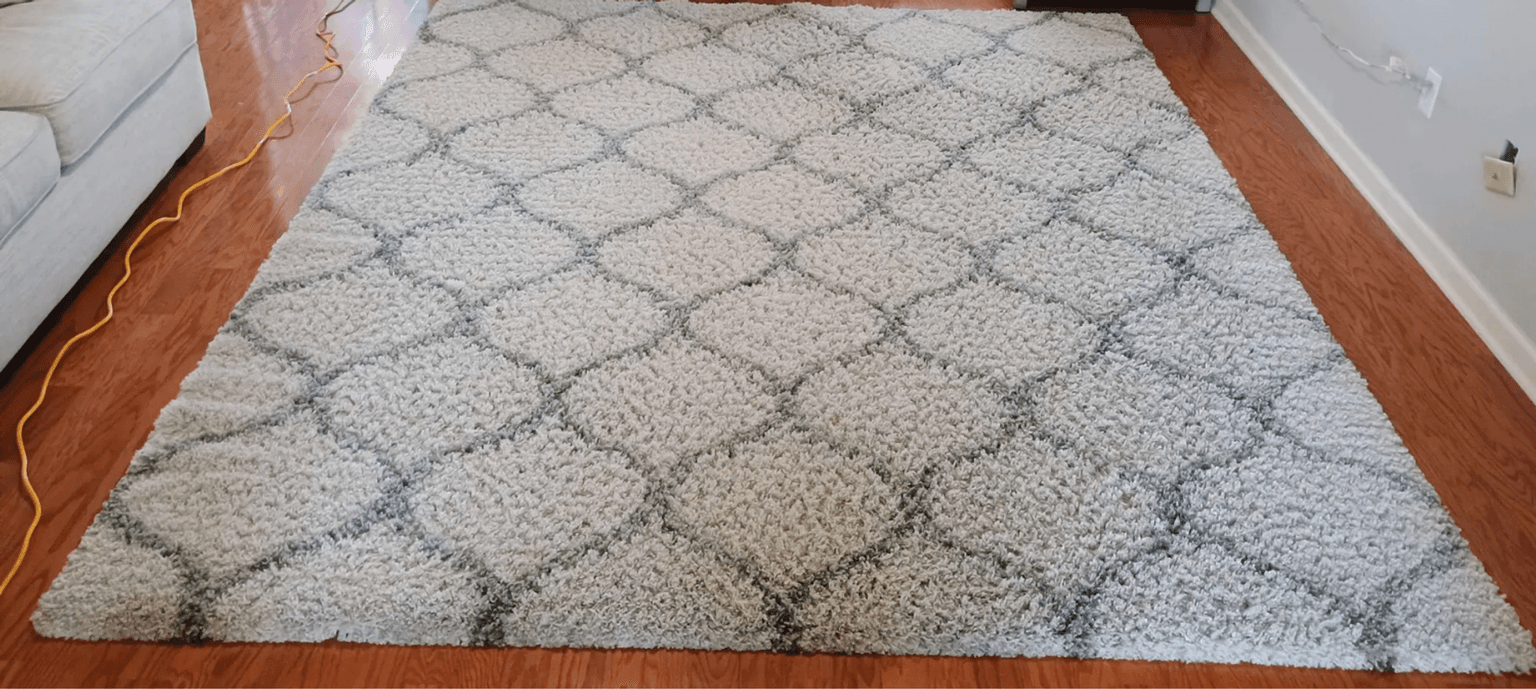
We clean area rugs right where they lie, on your own floor, using the same carbonated process we use on wall-to-wall carpet. Nothing gets soaked. A typical rug is back under the coffee table and dry enough to walk on within the hour, and you're welcome to watch the whole thing or ignore us and get on with your day.
Fibers we clean
Every rug gets identified before anything touches it. Wool and synthetics make up most of what we see in local homes, but the list runs longer:
- wool, hand-tufted or flatweave
- nylon and polyester
- olefin, the polypropylene rugs sold at most big-box stores
- cotton
- jute
- silk and silk blends, after a dye test
Jute gets its own warning. Too much water turns it brown, which is exactly what happens when someone attacks a spill with a bucket and a scrub brush. Our method keeps the moisture low enough that jute comes through fine. Silk always gets tested first, and if the colors look unstable we'll tell you so and leave that rug alone. Hand-knotted Persian and Turkish pieces have their own page, oriental rug cleaning, because they deserve a slower approach.
How the cleaning goes
The tech starts by looking the rug over with you, front and back. Fiber, weave, backing, and any pet stains or faded patches all get noted, since they decide how we handle the rest.
Next comes the dry soil. A rug holds a surprising amount of fine grit down near the backing, and a household vacuum barely reaches it. We shake it loose with agitation and pull it out with strong suction before any liquid goes on. Skip this step and you're turning grit into mud, which is the mistake behind a lot of rugs that look worse after a DIY cleaning.
Stains and odors get a pre-treatment matched to whatever caused them. Pet spots get an enzyme product. Coffee, wine, and food get a different spotter. Then the main clean: our solution is worked through the pile, the bubbles carry soil up off the fibers, and the machine draws it away. There's no rinse and no flooding, so the backing stays dry and so does the floor underneath. If the rug sits on hardwood in a Commonwealth or Sweetwater living room, that last part matters a lot.
Rugs on tile or wood dry right where they are. Thick wool takes a bit longer than a thin synthetic, since the fibers hold more. We sometimes prop a corner up so air can move under it, and we'll ask you to hold off on putting heavy furniture back until the backing feels dry to the touch. Rugs on top of carpet get a quick check underneath, since the carpet below is often dirtier than the rug.
We finish by grooming the pile so it lies in its natural direction. Fringe gets cleaned by hand, strand by strand where it needs it, so it comes out straight and lighter. Then you look it over with the tech before we pack up.
What a rug goes through here
Area rugs end up in the hardest-working spots in the house. Under the breakfast table where three kids eat. In front of the sofa where the dog stretches out. At the foot of the stairs, where everybody kicks off their shoes on the way up. In homes with tile downstairs, the rug is often the only soft surface catching the dirt.
Grit buried in a rug acts like sand on the fibers, nicking them every time someone walks across. Over a few years the colors go flat and the pile thins out in the traffic path. Pollen and pet dander settle in as well, and Fort Bend County doesn't give allergy sufferers much of an off-season.
A professional cleaning every 12 to 18 months keeps most rugs in good shape. With pets or allergies in the family, plan on every 6 to 12 months.
Here's the honest limit. Some cheap rugs aren't worth cleaning more than once. If a $60 polyester rug has been a puppy's favorite spot for a year, a new rug may cost less than the treatment, and we'll tell you that during the walk-around. Fresh spills and general dinginess come out well. Old urine that has already changed the dye will lighten, and it may not disappear.
Common worries, answered
Shrinking and color bleed both come from soaking a rug, and we don't soak them. A wool rug comes out the same size it went in.
A fiber protector is available after the clean if you want it. It gives you a few extra seconds to blot a spill before it sets, which is worth having on a rug under a dining table and probably pointless on a rug in a guest room.
Your technician gives you the price after looking at the rug and before starting any work. Rugs are $25 off with our coupon. Ring 832-500-5558 or book a time online. The 100% satisfaction guarantee covers rugs too. Spot something you're unhappy with and we re-clean it free.