
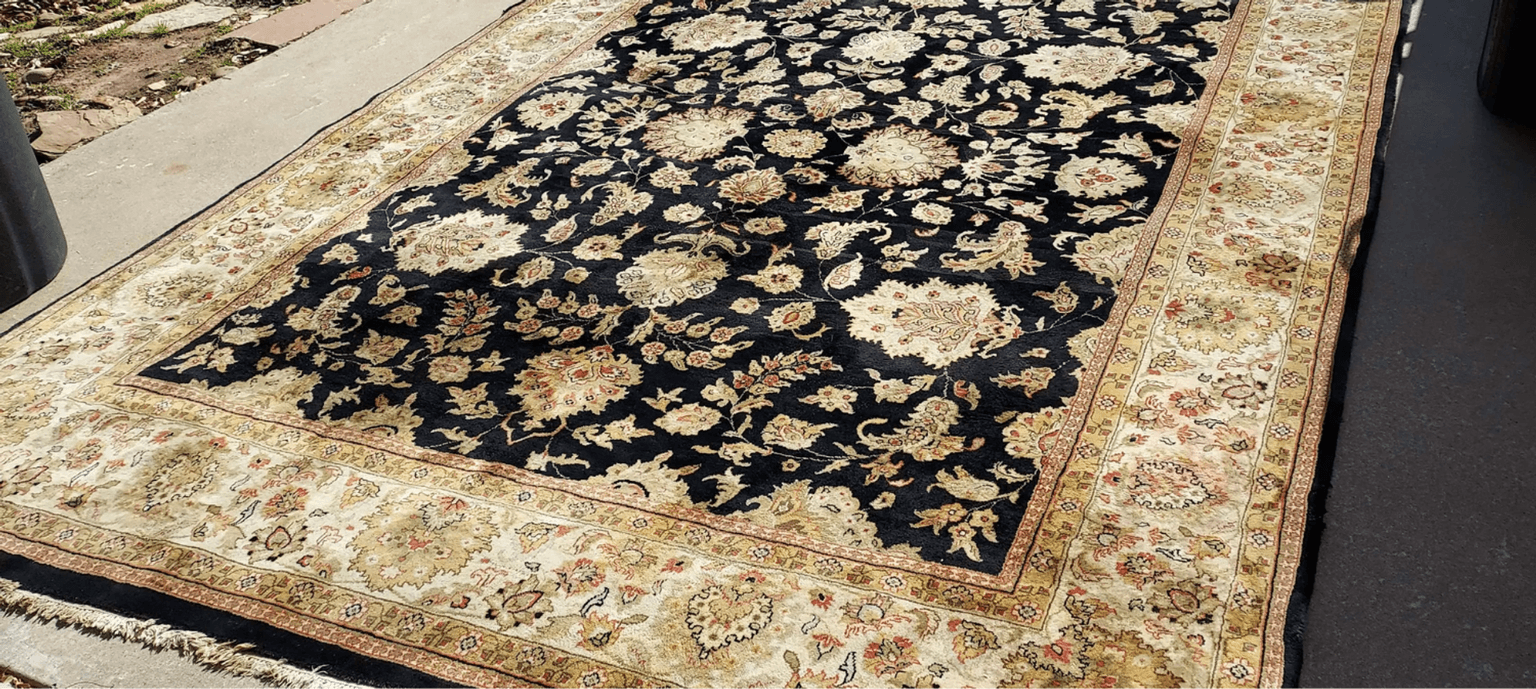
Ask someone where their oriental rug came from and you almost always get a story. A parent's Persian that has moved through four houses. A runner bought on a trip overseas. A wedding gift that was too nice to put anywhere but the formal dining room. Owners of these rugs tend to call us sounding a little nervous.
That nervousness is fair. Hand-knotted rugs are built differently from anything machine-made, with natural dyes, a cotton or wool foundation, and knots that can loosen if the rug is handled roughly or left wet. Our Sugar Land crew cleans them in your home, on the floor where they already sit, with a slow and careful version of our dry process.
Rugs we work on
We clean Persian and Turkish rugs, Afghan and Pakistani pieces, Indian and Chinese silks, wool and cotton orientals, and antique or collectible rugs that are both hand-knotted and hand-woven. Age and origin change our approach more than they change whether we can help.
First, we figure out what you have
The technician starts by studying the rug with you. We check the weave, the fiber, how the dyes behave, and the overall condition, and we note any trouble spots: worn patches, faded areas, fringe that has started to fray. A damp white cloth pressed on each color, somewhere out of sight, tells us whether a dye is going to move.
If something looks wrong, we stop there. A rug with unstable dyes or a foundation that is coming apart needs a restoration specialist, and we'd rather point you to one than make it worse.
Getting the grit out
Oriental rugs can hold pounds of sand and fine soil down at the base of the pile, much of it tracked in from the yard and the garage. That grit grinds at the knots every time someone steps on the rug. Household vacuums pull out very little of it.
So before any liquid goes on, we loosen the dry soil with gentle vibration and lift it out with suction. On an older rug this step alone can change how the colors read.
The clean itself
Spots and odors get a pre-treatment that is gentle on wool, silk, and plant-based dyes, with nothing in it to strip color. Then comes the main clean, using a low-moisture carbonated solution. Tiny bubbles work through the pile and loosen the soil without anyone scrubbing at the knots, and the machine carries it away.
We put down about 90 percent less water than a steam cleaner. That is the whole reason this method suits orientals. The pile gets clean while the foundation stays close to dry, which is what keeps a rug from shrinking, buckling, or bleeding red into the cream border.
Grooming and fringe
Once the pile is clean, it gets groomed by hand so it lies in its natural direction and the pattern looks crisp again. Fringe is handled on its own. It's usually cotton, it usually looks the dirtiest, and it takes careful hand work to brighten it without loosening the ends where it ties into the weave.
The rug dries in place. In most homes it's ready for foot traffic within the hour, though we'd leave the dining chairs off a thick wool rug a little longer. Before we go, the tech walks around the rug with you one more time.
Why it's worth doing on a schedule
Dirt dulls color. A rug that looks faded is often just dirty, and it comes back brighter than people expect.
It also shortens the rug's life. Grit cuts the fibers at the base, and a rug that should last generations wears thin in the traffic lane after a few decades of neglect. If your rug has real value, regular cleaning protects what it would appraise for.
Moths are another reason. They go after wool, and they prefer rugs that are dirty and undisturbed, like the one under a bed or a sofa that never moves. Keep a rug clean and moved now and then, and it's a far less appealing meal.
Odors and allergens build up quietly. Dust, dander, and the musty smell a wool rug can pick up after a stretch of damp weather all come out with a proper cleaning.
For timing, every 12 to 18 months suits a rug in a living area. A rug in a formal room that sees guests twice a year can go longer. One under a kitchen table with a dog nearby should probably be cleaned every 6 to 12 months.
Pet accidents and silk
Wool forgives a lot. A fresh urine spot on a wool oriental usually responds well to our enzyme treatment, which breaks down the source without harming the dyes. A corner that has been hit again and again for a year is the hardest case there is, and we'll give you a straight read on it before we begin.
Silk takes more caution. We use pH-balanced products that protect its sheen, and every silk rug gets the dye test, no exceptions.
Booking
Call 832-500-5558 or schedule online. The $25 off rugs offer on our coupons page applies here as well. The tech names the price after inspecting the rug and before any cleaning starts, and our 100% satisfaction guarantee stands behind the work. If you'd like a protector applied afterward, ask; it helps a rug shrug off the next spill. For everyday machine-made rugs, see our area rug cleaning page.