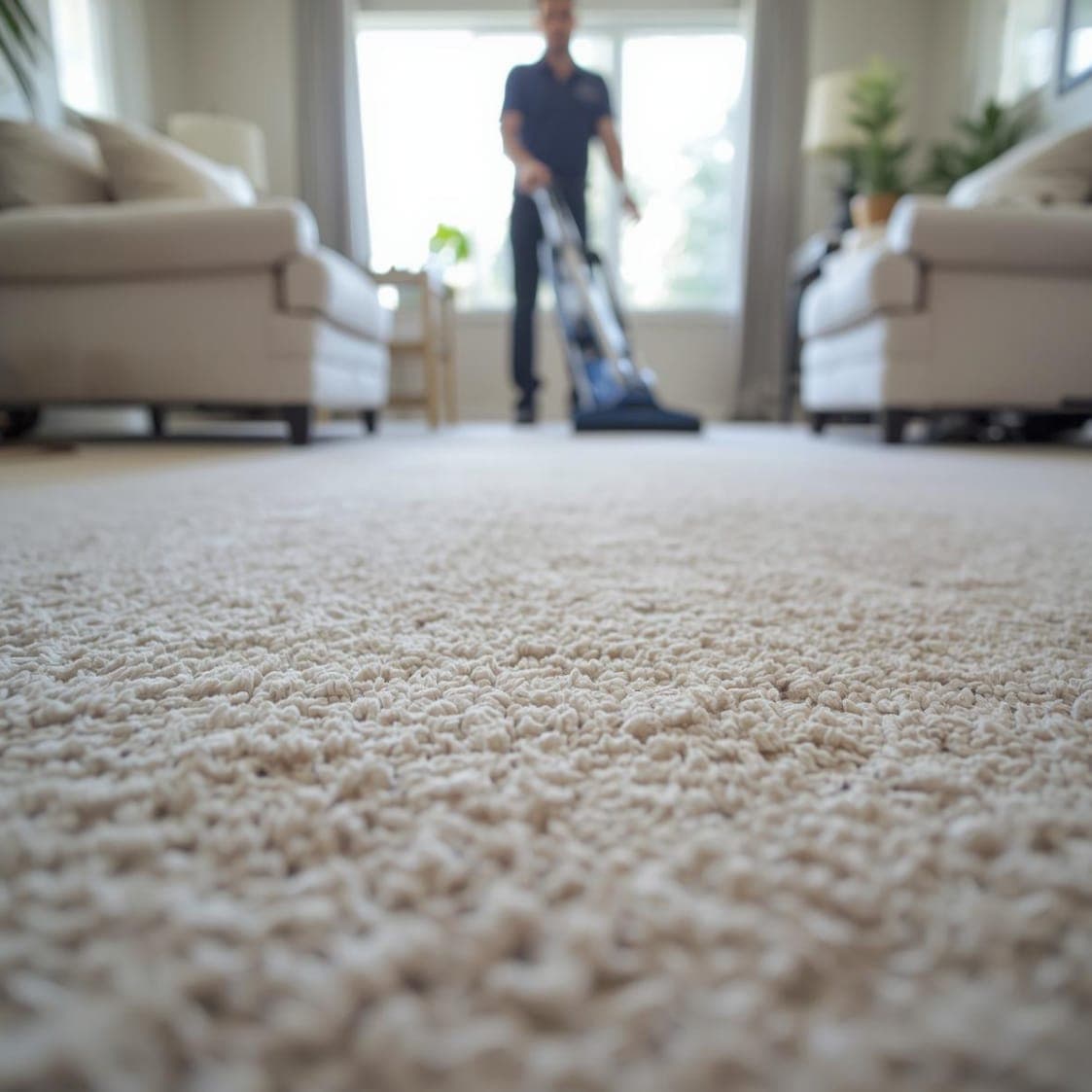
Carpet works like a big, flat air filter. Dust, pollen, and pet dander drift down out of the air, land in the pile, and stay there. That's actually helpful for a while, because whatever is in the carpet isn't floating around at nose height. The trouble starts when nobody ever empties the filter.
In Fort Bend County, that filter fills faster than in a lot of places. Our winters are mild enough that something is pollinating almost every month of the year, so pollen comes in on shoes, clothes, and pets in every season. Add a dog or two and a houseful of people, and the carpet in a typical Sugar Land family room is collecting all the time.
Where the buildup comes from and where it goes
Some of what ends up in carpet settles out of the air: household dust, pollen that came through an open door, fibers from clothes and bedding. A lot more rides in on shoes and paws, and the rest comes off the people and animals who live there.
Light particles sit on top at first. Then foot traffic does the rest. Every step presses them a little deeper, and the busiest rooms, the living room, the hallway, the bedroom you actually sleep in, end up holding the most. A carpet can look perfectly clean and be carrying a lot.
Walking across that carpet, sitting down on the floor with the kids, or even vacuuming with a weak machine pushes a share of those particles back into the air. They float, they get breathed, and they settle again. If you notice that dust shows up on the TV stand a day after you wipe it, or the allergy-prone person in the house feels worse in carpeted rooms, that cycle is likely part of it. We're carpet cleaners, not doctors, so if symptoms are serious, talk to one. But the floor is worth looking at.
What helps and what doesn't
Vacuuming helps a lot, if it's done well. Slow passes catch far more than quick ones. A vacuum with a sealed HEPA system keeps the fine stuff from blowing out the exhaust, and an emptied canister works better than a full one. High-traffic rooms in an allergy household deserve a vacuum every other day.
What vacuuming can't do is pull out the fine particles that have worked down near the backing, especially when they're stuck to old oils and residue. That residue is the hidden problem. Many spot cleaners and some carpet cleaning methods leave a sticky film in the fibers, and a sticky fiber holds onto dust and dander far better than a clean one. You end up with carpet that re-collects allergens faster after it's "cleaned."
Over-wetting is the other trap. Soak a carpet and let it dry slowly, and you can get musty odor and mildew in the pad, which an allergy sufferer will not thank you for.
So you want a method that actually pulls particles out of the carpet, leaves nothing sticky behind, and keeps the pad dry.
That's the case for the way we clean. Our process uses a hypoallergenic solution with carbonation that lifts soil up to the surface, where it's taken out, and it puts so little water into the carpet that the rooms dry fast. No soap stays behind to act as glue for the next round of dust. For homes that want an extra step, our antibacterial sanitizer can be added after the clean.
Habits round it out. A mat at every outside door. Shoes off inside if your family will go along with it. Pets wiped down after a long outdoor stretch in peak pollen months. Pet beds and throw blankets washed weekly.
Two common questions
How often should an allergy household get carpets cleaned?
Every six months is a reasonable target for the main living areas and bedrooms, more often in a house with pets. That's a starting point; your own symptoms are the better guide.
Will cleaning the carpet stop my allergies?
No promises there, and we'd be wary of anyone who makes one. Removing built-up dust, dander, and pollen from the biggest soft surface in the house is a sensible step. It works best combined with good vacuuming, clean HVAC filters, and whatever your doctor recommends.
If you'd like to start with the rooms where you spend the most time, our carpet cleaning service will do three rooms for $88. The deal is listed under current coupons.