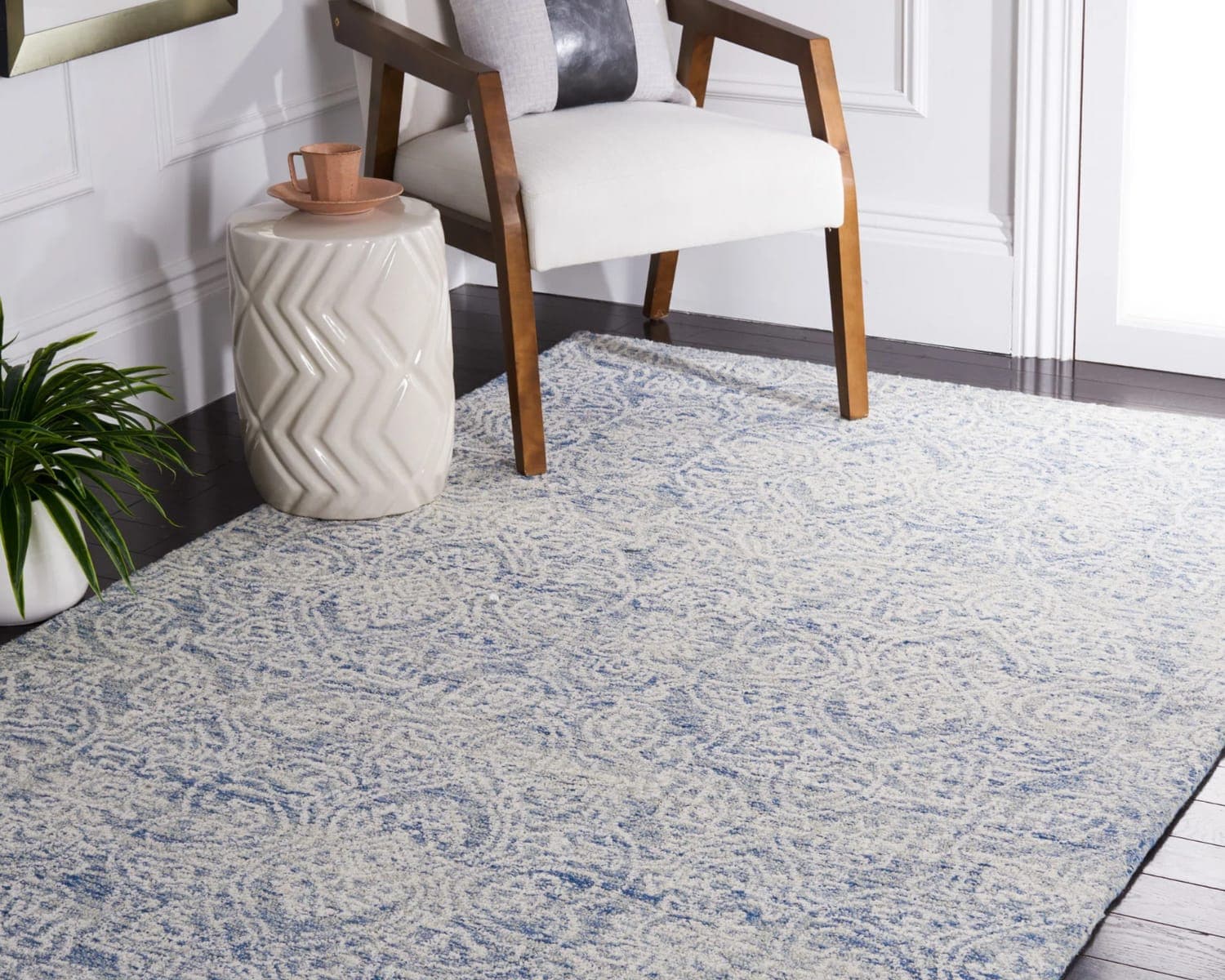
Lift a corner of a rug that's been down for a couple of years and fold it back on itself. Look at the base of the pile, where the tufts meet the backing. On a lot of rugs that zone is a shade or two darker than the tips, and if you tap the back, a little gray dust falls out onto the floor.
That's the dirt the vacuum has been missing.
Where it goes
Most of what ends up in a rug is dry soil carried in on shoes and paws: fine sand, grit, crumbs of dried mud from the yard. Pet dander, food crumbs and pollen from the open door join it, along with the oily film left by bare feet.
Heavier particles fall through the pile and settle at the base, where suction has a harder time reaching. The fine stuff clings to whatever oil is on the fibers. Dense and high-pile rugs hide this especially well, because the tips stay clean-looking while the bottom fills up.
What it does over time
First the color goes flat
Soil coating the fibers scatters light, so colors look muddy. The reds in a patterned rug drift toward brown, and a cream rug turns the color of weak tea down the walking path. People often assume the rug is fading. Most of the time it's dirty.
Then the texture changes
Sand grains have sharp little edges. Each footstep presses it into the strands, and over months that scuffs the surface of each strand and breaks some of them off. Traffic lanes start to feel flat and coarse, and a plush rug loses its bounce. Cleaning can make worn fibers look much better. It can't grow back what's been ground away, and that's the main reason we push people to clean before the rug looks bad.
Odors move in
Organic soil holds smell. Crumbs under the dining table, body oil in front of the sofa, dander where the dog naps: all of it gives off a stale note, and a bit of moisture from a spill or a damp August week brings it out. A rug that seems fine in January can smell like the dog by summer.
Eventually the wear shows from across the room
Left long enough, the walking path through the room is visible from the doorway, and the rug looks a decade older than it is. That's usually when people start browsing for a replacement, often for a rug that would have had years left if the base had been cleaned out twice a year.
Wool handles this better than synthetics in one way: its fibers have a natural crimp that hides soil for longer. The flip side is that by the time a wool rug looks dirty, there's usually a lot in it.
Why the vacuum stops keeping up
A vacuum handles loose surface soil and the bigger grit well. It does very little about soil glued to oily fibers, and on a thick rug it struggles to pull particles up from the base.
Shampoo and rental machines bring their own trouble. They leave soap in the fibers, the residue stays tacky, and the tacky fibers grab new dirt. Plenty of rugs get dirtier faster after each home shampoo.
Slowing it down
Good mats on both sides of every exterior door stop a surprising share of grit before it reaches a rug. Vacuum the back of the rug when you can, rotate it every few months so the traffic lane moves around, and clean spills before they dry and glue soil in place. Around pet beds and food bowls, vacuum more often than the rest of the house.
What a professional cleaning gets out
Our area rug cleaning happens right in your home. The technician checks the rug's fibers and dyes with you and gives you the price, pre-treats the traffic lanes and spots, then cleans with carbonated bubbles that lift soil up from the base of the pile. No soap stays behind, so the rug doesn't re-soil quickly, and it dries fast enough to go back under the furniture the same day. Handwoven wool and silk pieces get the gentler Oriental rug process.
For most homes, once or twice a year keeps the base from loading up. Try the fold-back test this weekend; if the base is darker than the tips, the $25 rug coupon on our coupons page is a good excuse to deal with it.